Mazda Coolant System Services in New London, CT
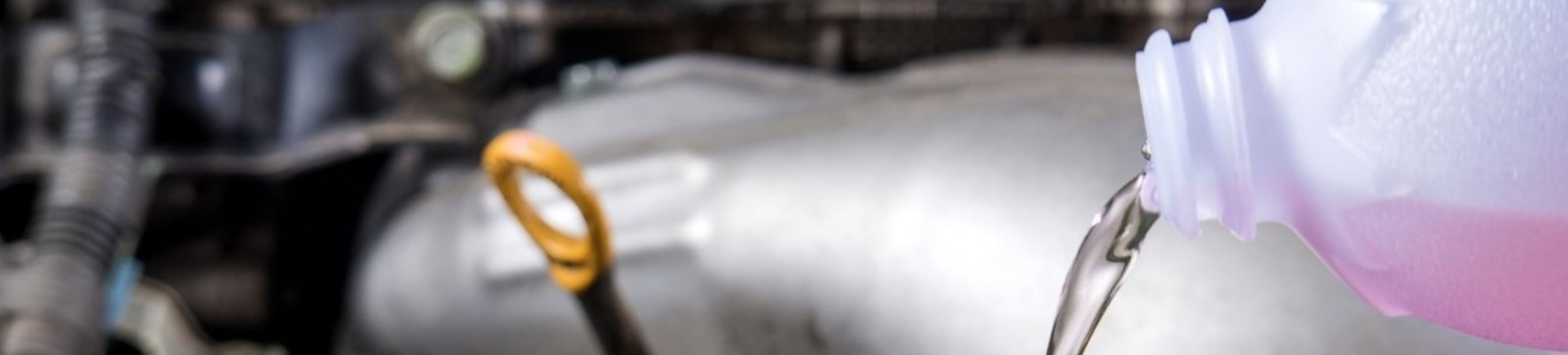
Stop Guessing About Your Cooling System
A coolant mix that has drifted too far toward water can turn to slush inside the engine on a bitter night, and a low-coolant message on the dash is easy to dismiss until the gauge starts to climb. The technicians at Whaling City Mazda in New London, CT test cooling systems on all makes and models with the cold months in mind. We begin by measuring what the coolant can still do, how much sits in the expansion tank and whether the type matches what the engine was designed for. Only after those readings are in does anyone talk about repairs. You see the results before approving a thing.
The Moving Parts Behind Your Cooling System
Coolant is a blend of glycol concentrate and water, and the proportion sets two limits at once: how cold it can get before it starts to freeze and how hot it can run before it boils. Water alone moves heat well but freezes early and offers no defense against corrosion. Glycol lowers the freezing point, lifts the boiling point and carries the inhibitor additives that shield the metal inside the engine.
Freezing does its damage in a way that is easy to underestimate. Water expands as it turns to ice, so a weak mix that freezes in the block or radiator can split a radiator tank or crack a pump housing, and the leak may not show until the engine thaws and pressure returns. Even short of solid ice, slush in the passages can stall circulation during the first minutes after a cold start.
- On many vehicles the expansion tank is pressurized and carries the system's cap, so it should never be opened while the engine is hot.
- A level sensor in the tank feeds the low-coolant message, which means the warning usually appears only after a real amount of coolant has gone missing.
- Rubber hoses stiffen and shrink slightly in deep cold, so a clamp that sealed all summer can begin to weep once temperatures drop.
- Turbocharged Skyactiv-G engines usually route coolant through the turbocharger's center housing to keep its bearings from overheating.
- Some engines keep an auxiliary pump running briefly after shutdown so coolant keeps moving through the turbocharger and cylinder head.
Heat after shutdown is the reason turbocharged engines are demanding on their coolant. When a hot engine is switched off, circulation stops, but the turbocharger and exhaust side keep shedding heat into the coolant around them. Coolant with tired additives or a low level can scorch in those spots and leave deposits that slowly narrow the smallest passages.
Pouring in extra concentrate before a cold season sounds like an extra safeguard, but straight glycol does not work that way. Past a certain point, more glycol actually raises the freezing point again and carries heat away less efficiently than a balanced mix. Protection comes from the right proportion, so a technician measures the mix before adding anything.
Early Clues That Point Toward Cooling System Repair
Most weak mixes start with good intentions. A driver adds plain water to clear a low-coolant message, does it again a few weeks later, and by the first deep cold the system holds more water than protection.
Blending coolant families causes a different kind of trouble. Coolants built on different inhibitor chemistries can react with each other, and the result may be a gel or brown sludge that coats radiator tubes, settles in the expansion tank and restricts flow. A jug labeled for all makes may be acceptable in a pinch, yet an engine still runs most reliably on the formula its maker specified.
- A coolant message that returns soon after the expansion tank was refilled, with no drip ever showing under the parked car.
- A brown film or a jelly-like layer in the expansion tank, a sign that two coolant types may have been mixed.
- A faint boiling or ticking sound from the tank area after a hard drive, once the engine has been switched off.
- Fresh crust or dampness at a hose joint after a frigid night, where a seal let go as the rubber contracted.
A low reading in the expansion tank on a frigid morning is not automatically a leak. Coolant contracts as it cools, so the level reads lower with a cold-soaked engine than after a drive. A technician compares the level over several days and pressurizes the system before calling anything a leak.
Testing before the first hard freeze is the timing that matters most. A weak mix found early is corrected with an exchange, while the same mix found after a frozen night may come with a cracked radiator or housing.
Repairs and Maintenance for Your Cooling System
Coolant visits range from a quick freeze and mix test up to a full exchange with the correct coolant, depending on what you are seeing.
Freeze Point and Mix Strength Check
The technician draws coolant from the expansion tank and reads its freeze point and boil point with a refractometer. Inhibitor strength and acidity are checked with test strips, since a mix can hold its freeze rating long after its corrosion defense is spent. The level, the tank cap seal and the condition of the tank itself are inspected at the same time. You get the readings and a plain answer about whether the coolant can stay.
Expansion Tank and Low Coolant Warning Diagnosis
When a low-coolant message keeps coming back, the cold system is pressurized and every hose joint, the radiator and the tank are inspected for seepage. The level sensor is tested so a faulty sensor is not mistaken for missing coolant. If no outside leak appears, the technician checks the oil and the exhaust for signs of internal loss. You hear where the coolant is going, or that the sensor was the culprit, before any work is approved.
Mixed Coolant Flush and Correct Refill
If two coolant types have been blended and sludge has formed, a simple drain and refill will not clear it, so the system is flushed until the old mixture is gone. The radiator, heater circuit and expansion tank are checked for deposits that may need extra cleaning. The engine is then filled with the coolant chemistry its maker specifies and bled using the correct procedure. A final freeze point reading confirms the new mix is where it should be.
Cooling System Repair Without Shortcuts
A coolant visit begins with the engine cold, both for safety and because the expansion tank level only means something once the system has cooled. Your advisor asks about warning messages and anything added recently, since knowing that a jug of water or an unknown coolant went in changes the testing plan.
Picture a driver who starts the car on a frosty morning in a driveway off Route 12, sees thick white vapor rolling from the tailpipe and reads online that it means a blown head gasket. The car comes in with its owner braced for a major repair. Testing finds the coolant level steady, no exhaust gases in the coolant and no coolant in the oil, and the vapor fades as the exhaust warms, because it was ordinary condensation. The head gasket is fine, and the only advice is to keep an eye on the level.
- Freeze point and boil point are measured, and the inhibitor reserve is tested separately because the two can wear out at different rates.
- The cooling system is pressurized cold, and the expansion tank cap is tested on its own for a seal that holds.
- When a head gasket is suspected, a chemical block test checks the coolant for exhaust gases before anyone suggests opening the engine.
- The readings, any leak found and a written estimate are reviewed with you, and nothing begins until you sign off.
After an exchange or repair, the engine runs to full temperature so the technician can confirm the cooling fans, the thermostat and steady circulation. Once the engine cools again, the expansion tank level is checked and corrected, and the freeze point is read a final time.
All makes and models are welcome, whether the car in the bay is a commuter sedan or a family SUV. When the schedule and parts allow, a mix test, an exchange or a hose replacement can often be finished the same day, and any part that needs ordering is flagged at drop-off.
New London-Area Cooling System Repair at Whaling City Mazda
At Whaling City Mazda, factory-trained technicians look after the cooling systems of Mazda sedans and hatchbacks such as the Mazda3, sports cars like the MX-5 Miata, and crossovers including the CX-30, CX-5, CX-50, CX-70, and CX-90. Mazda specifies its own FL22 long-life coolant, and the correct type and fill procedure are confirmed against your VIN before anything is added. Live coolant temperature readings come through diagnostic software, which can also run the cooling fans for testing on many models.
Many current Mazda engines feature Skyactiv-G turbo technology, so the technicians pay close attention to the coolant circuit that serves the turbocharger and to any after-run pump your model uses. Your advisor can explain how that applies to your vehicle.
- Genuine Mazda FL22 coolant can be requested by owners who want the formula the engine was filled with at the factory.
- Published Mazda bulletins about coolant level messages are looked up for your model and build.
- Freeze point readings can be logged with your vehicle history, giving the next visit a point of comparison.
Find Whaling City Mazda in New London, CT
Cooling System Repair for Neighborhoods Across New London County
A frosty start before crossing the Gold Star Memorial Bridge, or a cold drive down Route 12 through town, is often the moment a low-coolant message or a slow-to-warm gauge first appears. New England winters bring nights cold enough to expose any weak mix, so drivers from across New London County and nearby towns ask Whaling City Mazda to test freeze protection before the deep cold arrives.
- New London, CT
- Groton, CT
- Norwich, CT
- Waterford, CT
- Mystic, CT
- Stonington, CT
A freeze point reading takes little time and settles the question before the cold does.
Cooling System Care Questions We Hear Often
Owners ask these coolant questions most often once the weather turns cold.
Q: What does white vapor from the tailpipe on a cold start actually mean?
Q: What happens if two different coolant types end up mixed together?
Q: Why do turbocharged engines need extra attention to coolant?
Q: Is it normal for the coolant level to look lower on a cold morning?
Q: Will you service the cooling system on my vehicle if it is not a Mazda?
Ring the service desk with the warning message, the vapor or the level change you noticed, and an advisor will suggest which coolant tests fit.
Knowing what was last added to the tank helps too.
Get Your Cooling System on the Schedule
Cold weather picks its own moment to find a weak mix. A test before the deep freeze takes a short visit, while a cracked radiator discovered on a frozen morning means a tow and a much larger repair.
Every reading and estimate is shared before work begins, and nothing is drained or replaced without your approval. If the coolant tests healthy, it stays in place.
Request a coolant visit from Whaling City Mazda and mention any warning messages you have seen. The service team will fit the test in as soon as the schedule opens.
Service Specials

Wild Card
FRONT OR REAR BRAKE SPECIAL
Problems with your Mazda's brakes are serious- don't wait too long! Use this coupon to receive a special discount* on the brake service you need. Call to schedu
Read More
CABIN AIR FILTER
A cabin air filter reduces interior impurities such as pollen, dust, & mold. An engine air filter prolongs the life and performance of your engine. Save whe
Read More
FUELSAVER PACKAGE
Clean fuel injectors improve gas mileage and reduce emissions. *Some restrictions apply, Call for details!
When is the last time you checked your tread? Let us inspect it and share your status - red, yellow, or green. We offer a Best Price Guarantee and all tires com
Read More
Automatic Transmission
• Drain and replace transmission fluid • Clean filter screen (if necessary) • Replace pan gasket (if necessary) • Inspect linkage (adjust if necessary) • Check
Read More
MAZDA SERVICE SAVINGS!
We value your business - save on any service or repair! -$5.00 off service $50.00 to $99.99 -$10.00 off service $100.00 to $199.99 -$15.00 off service $200.00 o
Read More
Mazda Service Special
• Replace engine oil and Genuine Mazda oil filter • Rotate and inspect tires, check brake wear • Check engine coolant • Check cooling system for leaks • Check a
Read More
Oil Change Special
0W-20 Synthetic Price. Includes Installation of Genuine Mazda Oil Filter, Motor Oil Refresh, Multi-Point Inspection and More.